
A new fence is a long-term investment, so it makes sense to ask how long it will actually last before you commit to a material. The honest answer depends on two things: what the fence is made of and what it has to live through. In the Treasure Valley, that means hot and dry summers, strong sun, winter freeze-thaw cycles, gusty wind, and soil that stays wet from irrigation for months at a time. Each material handles those conditions differently.
In this guide, we break down typical fence lifespans in Idaho by material, explain what shortens or extends that lifespan, and share the installation details that make the biggest difference. If you already know what you want, you can request a free estimate and we will walk your property with you.
What Idaho’s Climate Does to a Fence in the Treasure Valley
Before comparing materials, it helps to understand the specific stresses a fence faces here. Most fence failures we see trace back to one or more of these conditions rather than to the material simply wearing out.
Intense Sun and Dry Summer Heat
Our high elevation and long stretches of clear weather mean strong UV exposure. Sun breaks down unprotected wood fibers, fades finishes, and can make lower-grade vinyl brittle over time. Dry air also pulls moisture out of wood quickly, which leads to checking, cracking, and warping.
Freeze-Thaw Cycles
Winter nights below freezing followed by milder afternoons cause water in the soil to expand and contract repeatedly. That movement, called frost heave, can lift posts that were not set deep enough and leave a fence line wavy or leaning by spring.
Wind Load
Solid privacy fences act like a sail. Repeated gusts put steady pressure on posts and fasteners, loosening them a little at a time until panels start to rack or sag.
Irrigation and Soil Moisture
Sprinklers and flood irrigation keep the ground around posts damp through much of the growing season. Constant moisture at the base is the main reason wood posts rot and unprotected steel rusts at the ground line.
These stresses rarely act alone. A fence on an open rural lot may take the full force of wind and sun, while a fence in a newer subdivision might deal more with sprinkler overspray and tight soil. Knowing which conditions your property faces is the first step in choosing a material that will go the distance.
How Long Wood Fences Last in Boise and the Treasure Valley
Wood is still one of the most popular choices in the valley because of its natural look and privacy. A well-built cedar fence typically lasts around 15 to 20 years here when it is stained or sealed on a regular schedule. Left untreated, the same fence may start showing its age closer to the 10-year mark, especially on sun-facing runs and anywhere sprinklers hit the boards directly. Pressure-treated pine usually falls in a similar or slightly shorter range and is more prone to twisting as it dries.
Style plays a role too. Open designs like split rail and post-and-pole let wind pass through and dry out quickly after rain or irrigation, so they often age more gracefully than solid privacy panels. Tall, solid fences look great and block views, but they carry more wind load and hold moisture longer between boards.
Cedar holds up better than many softwoods because it naturally resists rot and insects, which is why it is the primary wood we use for our wood fence projects, from backyard privacy fences to ranch rail and corrals. Even so, cedar is not maintenance-free. Most homeowners here get the best results by applying a quality penetrating stain every two to three years and resealing sooner on the south and west sides of the property, where sun exposure is harshest.
The weak point on most wood fences is not the boards. It is the posts. Wood posts sitting in damp soil will eventually rot at or just below grade, and once a few posts go, the whole line starts to lean. That is why post selection and setting method matter as much as the lumber you see from the yard. Keeping sprinklers aimed away from the fence line and clearing soil and mulch off the bottom of the boards can also add years of service to any wood fence.
Vinyl and Chain Link Fence Lifespan in Idaho
Vinyl and chain link sit at opposite ends of the style spectrum, but both are known for long service lives with very little upkeep. For homeowners who would rather not spend weekends staining boards, either one can be a smart way to get more years out of a fence with less effort.
Vinyl Fencing
A quality vinyl fence commonly lasts 20 to 30 years or more. It will not rot, never needs paint, and shrugs off irrigation overspray. The biggest variables are material quality and installation. UV-stabilized vinyl resists yellowing and brittleness in our sun, while thin or low-grade products can crack after a hard freeze or a strong impact. Panels also expand and contract with temperature swings, so proper spacing and hardware are essential. Our vinyl fencing options include privacy, ranch rail, and three-rail styles for both homes and larger properties.
Chain Link Fencing
Galvanized chain link often lasts 15 to 20 years and can go well beyond that with a heavier zinc coating or a vinyl-coated finish. The zinc layer protects the steel from rust, so the main things to watch are scratches, spots where soil or debris builds up against the fabric, and bottom tension wire that stays wet. Because it is strong, affordable, and easy to repair in sections, chain link fencing remains a practical choice for backyards, pet runs, agricultural land, and commercial perimeters.
Metal Fence Lifespan: Steel, Wrought Iron, and Ornamental Options

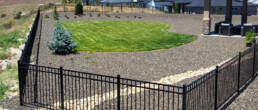
Metal fences are among the longest-lasting options available, but how long they last depends heavily on the finish and how well rust is kept in check. A powder-coated steel ornamental fence commonly lasts 20 years or longer before it needs refinishing. Traditional wrought iron can last for decades, and in some cases generations, as long as chips and scratches are touched up before rust takes hold. Aluminum does not rust at all, though it is lighter and less rigid than steel.
In the Treasure Valley, the most common trouble spot for metal fencing is the ground line, where sprinklers and wet soil meet the posts. Keeping that area dry and clear is the single easiest way to protect the finish. It is also worth inspecting welds and gate hinges once a year, since those points carry the most stress. If you are weighing the differences between metal types, our guide on wrought iron vs. steel ornamental fencing goes deeper into how each one performs.
For properties that need strength and security as well as good looks, our metal fence installations cover ornamental iron, decorative steel, security fencing, and heavy-duty agricultural builds. Because metal fences last so long, the initial finish quality and post setting are worth paying close attention to. A well-built metal fence can easily outlast two or three wood fences on the same property line.
Installation Choices That Add Years to Any Fence in Kuna, Meridian, and Beyond
Material gets most of the attention, but installation quality often decides whether a fence reaches the high end of its expected lifespan or fails early. Whether you are building on a suburban lot or open acreage in Kuna, these are the details that matter most:
- Post depth below the frost line. Boise-area frost depth is generally about 24 inches, so posts need to be set deeper than that to resist heaving. Taller or wind-exposed fences need even more depth.
- Drainage at the base. Concrete footings should be shaped to shed water away from the post rather than trap it. Standing water at the base speeds up both rot and rust.
- Grading that follows the land. Fences that step or rack with the terrain avoid gaps and stress points that shorten their lifespan on sloped lots.
- Proper spacing and fasteners. Correct board spacing, expansion allowances for vinyl, and corrosion-resistant hardware all prevent slow damage over time.
- Well-supported gates. Gates take more abuse than any other part of a fence. Heavy-duty posts and quality hinges keep them from sagging. Our gate installation work focuses on gates that keep working smoothly year after year.
Homeowners in newer subdivisions around Meridian should also watch sprinkler placement. Heads installed right next to a new fence line are one of the most common causes of early wear we see.
Finally, a little routine care goes a long way no matter what you choose. Walking the fence line each spring after the snow melts lets you catch loose boards, leaning posts, or chipped finishes while they are still small fixes. Tightening hardware, trimming back vegetation, and clearing debris from the base of the fence takes very little time and helps any material reach the top of its expected range.
Quick Fence Lifespan Comparison for Idaho Property Owners
Here is a simple side-by-side look at typical lifespans in Idaho’s climate. These are general ranges, not guarantees, and real results depend on installation, maintenance, and exposure on your property.
- Cedar wood: about 15 to 20 years with regular staining or sealing
- Pressure-treated pine: about 10 to 15 years
- Vinyl: about 20 to 30 years or more for UV-stabilized products
- Galvanized chain link: about 15 to 20 years, longer with vinyl coating
- Powder-coated steel: 20 years or more before refinishing
- Wrought iron: several decades with rust touch-ups
If your current fence is already near the end of these ranges, watch for widespread leaning, soft or crumbling posts, brittle panels, or rust that has eaten through the metal. Those are usually signs that replacement will serve you better than patching.
Lifespan is only half the equation. A material that lasts twice as long may be the better value even if it costs more upfront. To see how these materials compare on price, read our breakdown of fence installation costs in Idaho.
Plan a Fence Built for Idaho’s Seasons
The right fence for your property is one that fits your goals, your budget, and the conditions it will face every year. We are a locally owned fencing company based in Kuna, and we build fences with long-term performance as the priority, from post depth to the final gate adjustment. During your on-site visit, we will look at your layout, soil, sun exposure, and terrain, then recommend the material that will serve you best over the long haul.
Ready to find out which option makes the most sense for your property? Get a Free Estimate and we will help you build a fence that lasts.
Ready to Get Started? Get a Free Estimate Today!
Inspired to upgrade your property? As a locally owned team based in Kuna, Fence Unlimited is ready to deliver durable craftsmanship and thoughtful solutions for your fencing or gate project. Contact us for a free, no-obligation estimate and let’s get started with a solution built to last.
Like this article? Spread the word!
Related Posts

Fence Unlimited’s Winter Planning Guide for Spring Fence Projects in the Treasure Valley
Plan your spring fence project this winter. Our Treasure Valley guide covers goals,…

Fence Unlimited’s Guide to Choosing a Dog-Friendly Fence for Treasure Valley Homes
Choose the right dog-friendly fence for a Treasure Valley home: height, materials, gates,…

7 Ways to Protect Your Fence From Idaho Winter Weather
Get your fence ready for Idaho winter weather with 7 simple tips for Treasure Valley…