
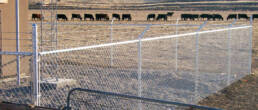
Fencing a farm or ranch property is a fundamentally different project than fencing a standard residential backyard. Acreage, livestock type, terrain, and long-term maintenance all factor into the decision in ways a standard yard fence never has to consider. Idaho’s open land and working properties call for fencing that holds up to daily use, weather extremes, and the specific animals it needs to contain.
This guide walks through the main material options for farm and ranch fencing, how they compare on cost and maintenance, and how to think through which one fits your property, your livestock, and your budget best.
What to Consider Before Choosing Ranch Fencing
Before comparing materials, it helps to answer a few questions about the property itself.
- How much acreage needs to be fenced? Larger perimeters shift the math toward materials that are cost-effective per linear foot, not just visually appealing.
- What type of livestock will the fence contain? Cattle, horses, and smaller livestock all put different kinds of pressure on a fence line, which affects height, spacing, and material strength requirements.
- What does the terrain look like? Sloped or uneven ground requires a fence that can follow the natural grade without gaps forming underneath.
- How much long-term maintenance are you willing to take on? Some materials require more upkeep than others, which matters over years of use on a working property.
Answering these questions upfront makes it much easier to compare wood, metal, and wire options on their actual merits instead of guessing.
Wood Options for Farm and Ranch Properties
Cedar remains a strong choice for agricultural fencing because it naturally resists moisture and pests while holding up well across Idaho’s seasons.
Ranch Rail Fencing
Typically built with three to four rails per post, ranch rail fencing maintains visibility and airflow across a property while clearly defining boundaries. It works well for both livestock containment and simple property line definition.
Corral Fencing
Built with heavy posts and durable rails, corral fencing is designed for daily use around livestock, holding up to pressure from animals while keeping clean sightlines for working pens and holding areas.
Split Rail Fencing
A classic, open style suited to acreage and pasture properties. Split rail defines boundaries without blocking views, making it a low-maintenance option for large rural landscapes.
Post and Pole Fencing
Built for long spans and uneven ground, post and pole fencing is a rugged, traditional option for wide-open spaces where strength and longevity matter most.
Hog Panel Fencing
Combining cedar with welded wire panels, hog panel fencing offers strong visibility while still providing reliable containment for smaller livestock and pets. It works well for properties that want a mix of open sightlines and dependable boundary control without the higher cost of solid wood construction across the entire perimeter.
Metal Options for Farm and Ranch Properties
Metal fencing brings a different set of strengths to agricultural properties, particularly where durability and minimal upkeep are the priority.
Metal Pipe and Ranch Rail Fencing
Built from heavy-duty steel pipe rails, this style resists bending, sagging, and impact while standing up to livestock pressure and Idaho’s seasonal extremes, all with relatively low ongoing maintenance.
Oilfield Pipe Fencing
Constructed from reclaimed or new oilfield-grade steel pipe, this is one of the strongest fencing options available for corrals, livestock containment, and heavy-use agricultural environments that need to hold up for decades.
Barbed Wire and Field Fence Systems
A cost-effective, functional option for large acreage properties. Installed with steel T-posts or pipe posts, these systems focus on proper tensioning and spacing for reliable livestock containment across open land.
Agricultural and Livestock Metal Fencing
For working farms, mixed pipe-and-wire configurations or reinforced field fencing can be tailored to specific animals and operational needs, prioritizing strength, safety, and day-to-day efficiency.
Wood vs. Metal vs. Wire: Which Is Right for Your Property
There is rarely a single correct answer here. The right material depends on how the property is actually used.
- Cost per linear foot. Wire and pipe systems tend to be the most economical for very large perimeters, while wood and premium metal options cost more but often deliver a stronger visual presence near a home or entrance.
- Maintenance over time. Wood requires periodic staining and hardware checks, while metal pipe and wire systems generally need less frequent attention beyond tension and post inspections.
- Livestock type. Cattle and larger livestock often do well with pipe, rail, or wire systems built for heavier pressure, while horse properties frequently favor wood or smooth wire to reduce injury risk.
- Visual priorities. Many ranch owners use wood or ranch rail styling near the house and entrance, then transition to wire or pipe fencing for the working acreage further out.
It is also common to mix materials across one property rather than choosing just one. A homeowner near the house might prefer the finished look of ranch rail wood fencing, while the same property could switch to pipe or wire fencing once it reaches open pasture further from view. This kind of layering keeps costs reasonable on the long stretches while still investing in appearance where it matters most. Our wood fence installation services and metal fence installation services both cover agricultural applications, which makes it easy to combine styles where it makes sense for your layout.
Gates for Farm and Ranch Properties
A ranch fencing plan is not complete without thinking through gate access. Agricultural gates need to handle regular equipment traffic, livestock movement, and sometimes daily use by multiple family members or employees, which puts more demand on hardware and post sizing than a typical residential walk gate.
- Swing gates work well for most driveway and pasture entrances, offering a simple, dependable option for regular vehicle and livestock access.
- Slide gates can be a better fit for tighter spaces or entrances that see frequent equipment traffic where a swinging arc is not practical.
- Wider agricultural openings often call for reinforced posts and heavier-duty hardware to prevent sagging over years of daily use.
If a property is large enough that gates are opened and closed multiple times a day, automation is also worth considering. Our gate installation and automation services cover both standard swing and slide gates as well as automated systems built for agricultural use.
Working With a Fence Contractor on a Ranch Property

Agricultural fencing projects tend to be more involved than a standard residential job, simply due to the acreage and terrain most ranch properties cover. A contractor experienced with grading a fence line to follow natural terrain, rather than forcing a straight run that leaves gaps on uneven ground, makes a real difference in how well the fence performs over time.
It is also worth asking about post setting depth, material sourcing, and whether the contractor has direct experience with the specific livestock you are containing. A fence built for cattle does not always meet the needs of a horse property, and a layout designed for sheep or goats often requires tighter spacing than either. Getting these details right from the start prevents costly adjustments down the road, especially on properties where re-doing a section later means working around active livestock.
Ranch Fencing Checklist for Idaho Property Owners
Before requesting quotes for a farm or ranch fencing project, work through this short list:
- Confirm the total acreage and perimeter length that needs fencing.
- Identify the specific livestock the fence needs to contain.
- Walk the terrain and note any slopes, drainage areas, or uneven ground.
- Decide how much long-term maintenance you are willing to take on.
- Consider whether different materials make sense for different sections of the property.
- Ask any contractor you are considering about their experience with agricultural and livestock fencing specifically.
- Plan gate placement and access points early, since these often shape the rest of the fence layout.
Working through these points before comparing estimates makes it much easier to evaluate quotes on an apples-to-apples basis.
Get a Free Ranch Fencing Estimate
Farm and ranch fencing is a long-term investment in how your property functions day to day, not just how it looks from the road. Whether you need wood, metal, wire, or a combination across a property in Nampa or elsewhere in the Treasure Valley, our team can walk the land, talk through your livestock and terrain needs, and recommend a layout built to last.
Get a Free Estimate today and let’s put together a fencing plan built for how your property actually works.
Ready to Get Started? Get a Free Estimate Today!
Inspired to upgrade your property? As a locally owned team based in Kuna, Fence Unlimited is ready to deliver durable craftsmanship and thoughtful solutions for your fencing or gate project. Contact us for a free, no-obligation estimate and let’s get started with a solution built to last.
Like this article? Spread the word!
Related Posts

Fence Unlimited’s Winter Planning Guide for Spring Fence Projects in the Treasure Valley
Plan your spring fence project this winter. Our Treasure Valley guide covers goals,…

Fence Unlimited’s Guide to Choosing a Dog-Friendly Fence for Treasure Valley Homes
Choose the right dog-friendly fence for a Treasure Valley home: height, materials, gates,…

Do Automatic Gates Work in Freezing Weather? What Idaho Gate Owners Should Know
Do automatic gates work in freezing weather? Learn how Idaho winters affect gate openers…